
Payment fraud: how collaboration fights social engineering
Payment fraud costs Europe over €4 billion a year as criminals target people, not systems. Luxembourg experts explain how collaboration and AI fight back.
 Emilio Naud
15/07/2026
Payment fraud costs Europe over €4 billion annually, according to European Central Bank and European Banking Authority data, and criminals are now targeting people, not systems, through social engineering —the manipulation of individuals into authorising transactions or divulging credentials. Luxembourg's financial, telecom and technology sectors are fighting back.
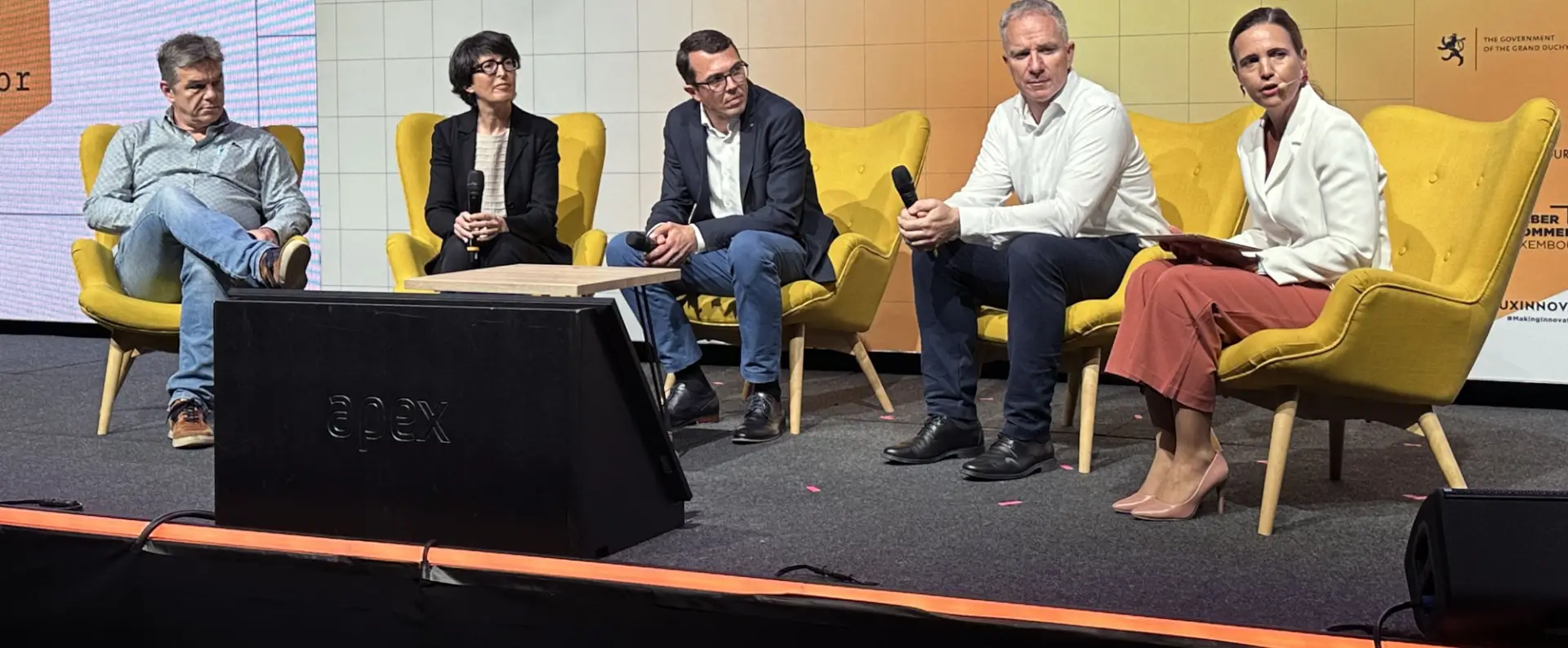
The fight against fraud has entered a new phase, moving from purely technical defences to combating sophisticated social engineering. This was the central theme of a recent panel discussion at Nexus Luxembourg on 10 June featuring leaders from Luxembourg’s financial, telecommunications and technology sectors.
“We've shifted a lot from fraud to scams,” explained Claire Alexandre, Head of International Government Relations at PayPal. “Our systems, our platforms, are more and more secure, but it's the human being in the equation that is what is actually taking off at a very large scale.”
Cross-sector collaboration to prevent payment fraud
Panellists agreed that because fraud now happens before a payment is even initiated—through phishing, fake websites and elaborate impersonation schemes—the solution requires a “whole society approach.”
Luxembourg’s ecosystem is already demonstrating the power of this collaboration. Pierre Grasset, Chief Commercial Officer at LuxTrust, described how they work with partners to combat SMS phishing campaigns. “Last year we faced 6 million phishing attempts," he noted. "Thanks to what we put together, we managed to stop 90% of the fraud."
This success relies on a partnership between identity specialists like LuxTrust and telecommunications operators. Alain Hirtzig, Head of Cyberlabs at Post Luxembourg, explained their role. “We started embedding protections to prevent spoofing,” he said, adding that the infrastructure built to protect their own network is now used to provide phishing protection for business customers. “The full chain—detection, blocking, takedown—is fully automated.”
Smarter security without slowing payments
While stopping criminals is critical, maintaining a seamless customer experience is just as important. The challenge is to add security without creating unnecessary friction.
“The thing is not to necessarily move to more friction but to have smarter friction,” said Claude Meurisse, CEO of LUXHUB. He cited Verification of Payee (VoP), which happens before a payment is authorised, as a good example of a well-perceived security step that doesn’t break the payment flow.
Technology provides solutions that can work in the background. Ms Alexandre mentioned the use of “passkeys” (cryptographic credentials that replace passwords and resist phishing) for stronger authentication and “contextual scam warnings” that alert a user if a transaction appears suspicious, without blocking legitimate payments. “We leverage technology to make sure that the customer experience is seamless,” she concluded.
AI-powered fraud detection for the next wave
The panellists highlighted that fighting fraud intelligently requires better data, machine learning models and greater cooperation. Access to secure infrastructure and specialist support is particularly critical for smaller companies entering this space. Luxembourg AI Factory provides SMEs with expertise, testing infrastructure and programmes such as Fit 4 AI to build and deploy trusted AI—capabilities directly relevant to real-time transaction monitoring and anomaly detection.
Common fraud tactics include:
- Phishing emails and SMS messages impersonating trusted institutions
- Fake websites replicating legitimate payment platforms
- Phone-based impersonation using spoofed numbers
- Manipulating victims into authorising real-time transfers