
Quantum cybersecurity: experts call for immediate action
At Scynergy 2026, experts from IBM, LIST, SES and NTT Data urged businesses to prepare now for quantum threats to cybersecurity — before today's encryption becomes obsolete.
 Emilio Naud
30/04/2026
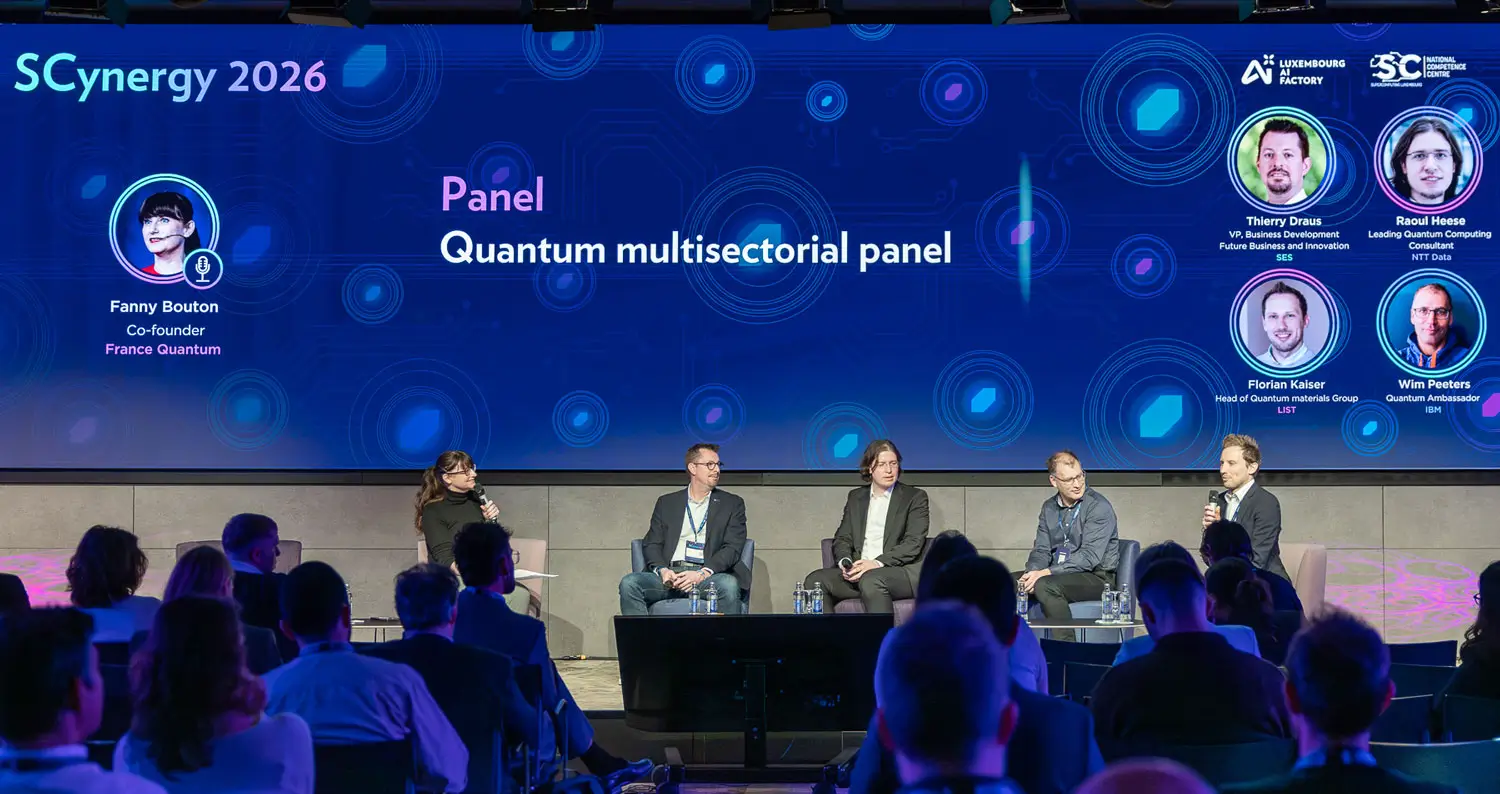
Leading voices from technology, research, and industry convened at the Luxembourg Chamber of Commerce on 15 April for the "Quantum Multisectorial Panel". The discussion at Scynergy 2026 moved beyond the hype of quantum computing to address the clear and present danger it poses to cybersecurity, concluding that the time for businesses to prepare is now.
Where does quantum computing actually stand?
How close are we to a quantum computer that can break today's encryption? The panel worked to separate fact from hype. While a powerful, fault-tolerant quantum computer capable of breaking today’s encryption standards is not yet a reality, the panellists stressed that this does not diminish the urgency of the threat. "We are still years away from a quantum computer that can break current encryption, but the journey has begun," said Wim Peeters, Ecosystem Technical Leader at IBM. "The focus today should be on building quantum-safe infrastructure." Florian Kaiser, Group Leader at the Luxembourg Institute of Science and Technology (LIST) added: "For businesses, the immediate concern is data security. Luxembourg's ecosystem is perfectly placed to test and implement new quantum-safe standards." He then compared the evolution of the quantum internet to mobile networks. "You have to see this a bit like the mobile phone generations... 1G, 2G, 3G, then the 4G LTE, and now everybody is using 5G. It will be similar for the quantum internet", he explained, framing it as a generational rollout from basic secure links today to a fully entangled network in the future.
The silent threat: "harvest now, decrypt later"
The discussion then turned to a risk that already exists today: "harvest now, decrypt later". Adversaries are collecting encrypted data now, with the aim of decrypting it once a sufficiently powerful quantum computer becomes available. The solution, the panel agreed, is a swift transition to Post-Quantum Cryptography (PQC)—cryptographic methods designed to withstand attacks from both today's computers and future quantum machines.
Thierry Draus, Vice President at SES emphasised the long-term perspective. "For a global operator like SES, data integrity and confidentiality are non-negotiable," he stated. "The transition to PQC is not a choice; it is an urgent necessity to protect our assets and customers' data for decades to come. The migration will impact every part of our digital lives. We are speaking about asymmetric keys", he explained, "Your credit card is actually secured with these kind of systems. HTTPS is relying on this." Representing IT services firm NTT Data, Raoul Heese focused on the practical steps for businesses. "The biggest challenge is not the technology itself, but the migration process. Starting the PQC transition today is a matter of corporate due diligence."
Europe and Luxembourg in the quantum race
The panel also situated the quantum challenge within a competitive global context, highlighting Europe's robust position. "Europe has a very diversified and strong quantum ecosystem," noted Raoul Heese. "A lot of smart researchers and universities were working on this before quantum became cool, so we are very early in the game."
This is exemplified by strategic initiatives like EuroQCI, a European Commission programme to build a secure quantum communication infrastructure across EU member states. Thierry Draus explained its significance: "The European Commission is betting on quantum key distribution to secure communication systems for Europe... and the entire value chain, from photonic circuits to end-to-end solutions, is present in Europe."
Luxembourg is actively contributing to this ecosystem. "We have now started the Quantum Internet Alliance," announced Florian Kaiser, referring to a new partnership between LIST and multidisciplinary institutions and industry actors in Europe. "The goal is to strengthen our forces, particularly in quantum communication where we have a lot of expertise."
As companies grapple with these complex technological shifts, the national ecosystem offers concrete support. Initiatives such as the Luxembourg AI Factory provide dedicated programmes that help businesses, particularly SMEs, assess their AI and cybersecurity readiness. This support is crucial for developing a strategic roadmap to adopt new technologies like PQC, ensuring that proactive preparation becomes the key differentiator between secure and vulnerable enterprises in the dawning quantum era.