


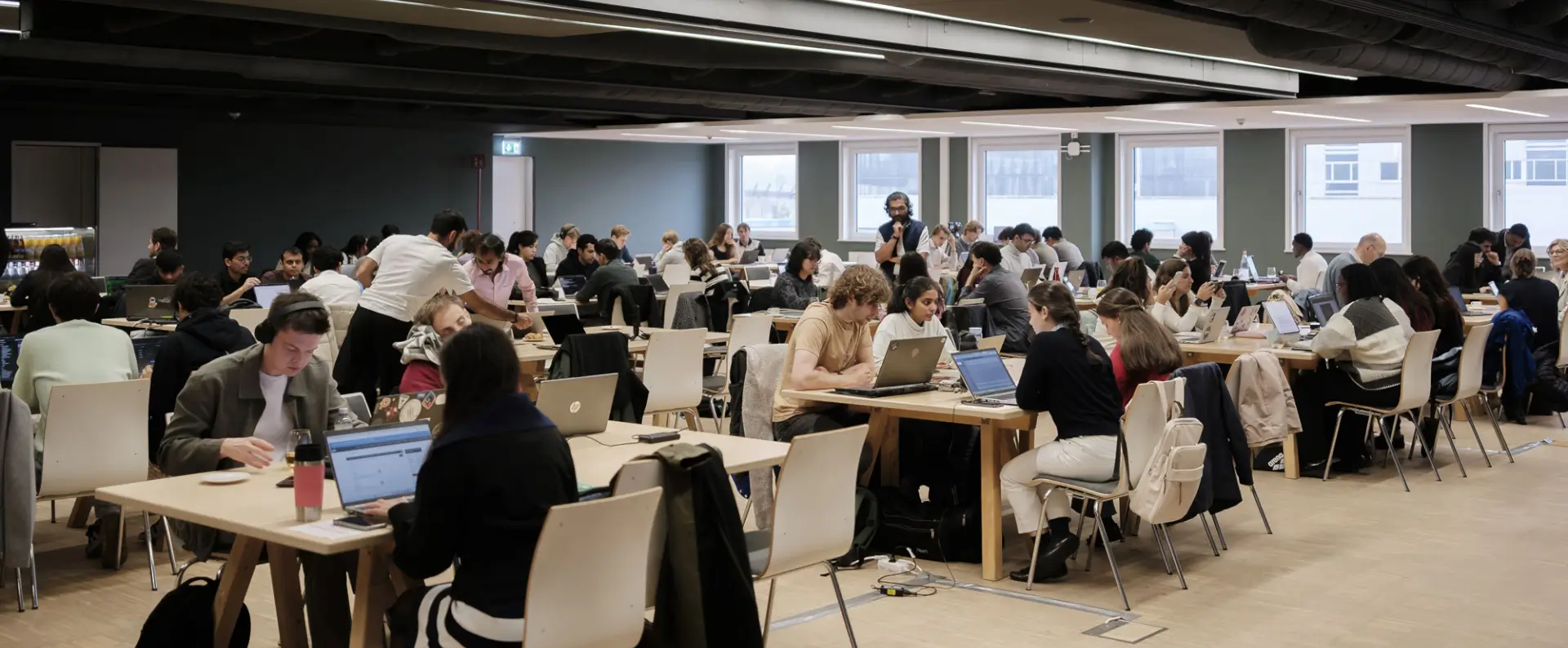
Space AI hackathon: students solve real-world orbital challenges
Student teams used supercomputing at the space AI hackathon to tackle microgravity bubbles and lunar landing routes. Find out how.
 Emilio
27/11/2026
Student teams used artificial intelligence (AI) and supercomputing to tackle real-world space challenges at a space AI hackathon in Luxembourg on 19 and 20 October 2026. Organised within the NeoSpace event by Luxembourg Space Agency, the Luxembourg AI Factory hackathon set student teams against industry bottlenecks, from bubbles in microgravity to lunar landing site selection.
Which teams won the space AI hackathon?
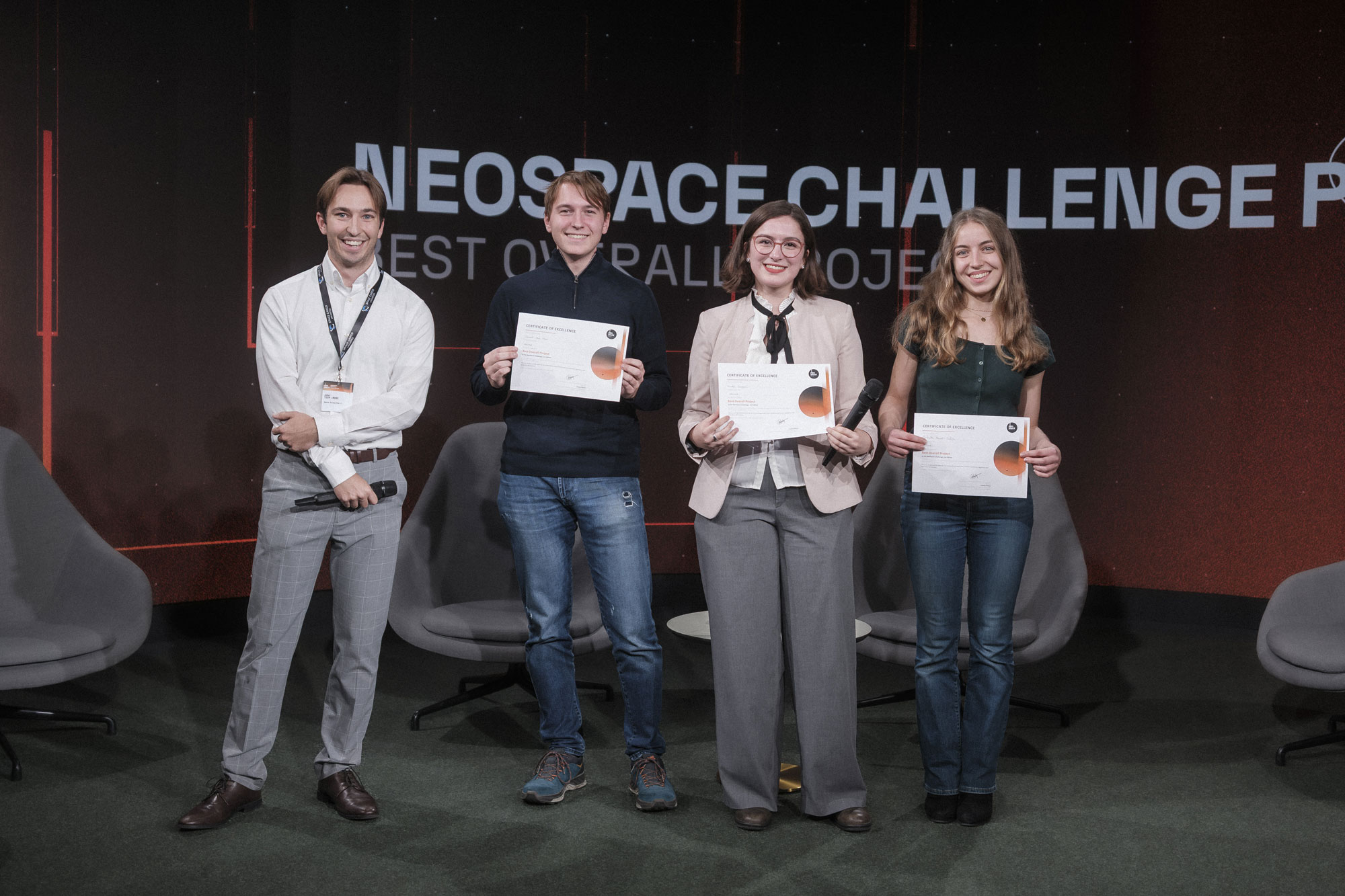
Anuma won Best Overall Project, and team BEST (Bubbles Eliminated, Scanned and Transported) won Best Technical Solution. Team LYNQ took Best Business Model, while Kepler, a team of students from the University of Luxembourg, received Best Regulatory Approach. Bastellar was recognised with a Special Mention. The jury assessed entries across technical, business and regulatory dimensions, and the teams combined backgrounds in aerospace, biology, computational mechanics, data and AI.
How AI tackled microgravity bubbles and lunar landing selection
Exobiosphere, a space biotechnology company, set a challenge on a problem that can halt biological research in orbit. "The challenge was focused on a really serious problem that we have in space, which is essentially up in orbit, bubbles form and they're very difficult to get out of your culture system. They can destroy experiments in a matter of minutes," explained Chris Puhl, Business Developer at Exobiosphere.
Team BEST proposed a combined approach. A scanning system detects bubbles, active ultrasound moves them, and passive surface coatings help disperse them away from cells. Naveed, representing team BEST, explained the physics. Bubbles dissipate in 0.07 seconds on Earth, but in microgravity they can take up to 19 hours to disappear. "Cells in space have a unique and beneficial environment because diseases develop much quicker, which means we can test drugs against them," he said. "But new environments present new challenges, and one of these is bubbles."
To validate the design, the team ran fluid simulations on MeluXina, Luxembourg's national supercomputer, using OpenFOAM -an open-source computational fluid dynamics tool. "To get anything to produce a simulation meaningful enough that we can rely on it to be analogous to reality, we need a lot of computing power, and for this MeluXina came in very handy," Naveed said. Mr Puhl credited the speed of the work to computing resources. "They can't do all the work for you, but they clearly did so much of the maturation work... in the three-week period, they went from a concept to, you know, basically a technology readiness level three or four, which is incredible."
Lunar exploration company ispace Europe set a second challenge: selecting landing sites in the South Pole region, which contains tens of thousands of candidate points. "The challenge is not only to build the process for how you might select a landing site, but also to look at the business case, to look at the regulations involved, and to give a broad picture of how multiple agencies might have worked together to find the best place to send their missions," said John Toop Rose, Mission Operations Engineer at ispace Europe.
Team Anuma built a layered mapping tool. Each rule, such as slope or illumination, produces a map that filters out unsuitable locations. The layers are weighted and combined into a score, leaving a shortlist of the top 10 candidates for engineers to review. Nicole, from team Anuma, stressed transparency. "We wanted Anuma to be fully transparent and mostly mathematics and statistics facts, not just a random AI tool."
Team LYNQ addressed a different bottleneck for OQ Technology, a company developing new-generation satellites in Luxembourg. "We made one digital twin based on our idea. They can find the best scenario for sending their satellites the best way with the lowest latency and the full coverage on the world and the budget exactly," said Davoud, team member at LYNQ.
Kepler proposed a low Earth orbit (LEO) satellite to track debris between 1 and 10 cm, with a full end-of-life plan compliant with the upcoming EU Space Act. Bastellar proposed renting bays on 12U satellites to researchers who cannot fund their own missions. Its tiered database offers open, embargoed or encrypted access to the collected data.
What students learned from cross-disciplinary AI collaboration
Team LYNQ comprised four students with different academic backgrounds, and the teams had to collaborate quickly. Davoud reflected on the experience. "It's really important to work in a group, it can improve our skills to work in a group in the future." The team relied on AI to split tasks and structure its proposal. Asked whether the team could have managed without it, he answered: "AI was a key."
Naveed said AI was embraced from the start of the challenge. "They actually promoted it from the very start in the mission brief. They said when you tackle these problems we recommend using AI models and using agents."
Members of team Anuma described what they learned. Daniel said: "I learned to make business cases for very complicated market because there was no real precedent." Juliet added: "I learned to work in a foreign language, English for me, under time pressure and with a team I did not know at all yesterday."
What comes next for the winning teams
Team BEST plans to protect its work. Naveed said: "We had some advice to look into patenting our idea," and the team will explore partnerships with Exobiosphere or other biotech companies. "One thing that we have been quite guilty of is being quite theoretical with our approach so far. But we are quite eager to see if our experimental tests can meet the realities that we want to have."
After the event, team BEST spoke with Exobiosphere about intellectual property and commercialisation. Mr Puhl to the team: "I encourage them to do it not only from the perspective of it being technology useful for our company but useful for the industry as a whole." Mr Rose said ispace will act on several proposals: "There are a number of ideas that we will certainly be taking on board very directly." A member of team Anuma said the team would pursue the project if funding becomes available.
How Luxembourg connects students with space industry challenges
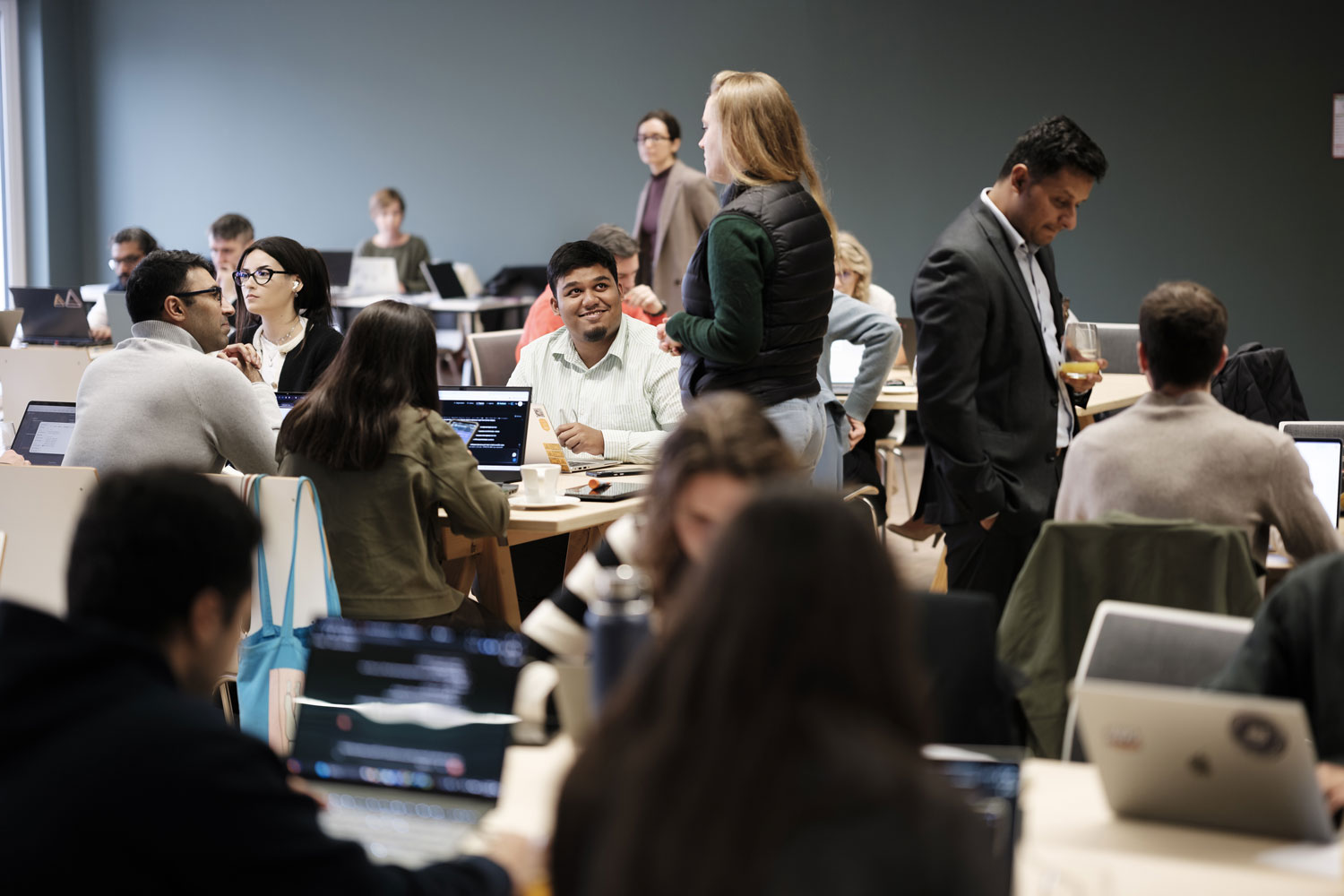
The hackathon showed how the Luxembourg AI ecosystem can connect students with industry problems. Naveed said he was surprised by the country's depth. "Luxembourg I've learned has a unique network of talent and pipeline of bringing people." Nicole, who is Luxembourgish, said she had seen the space sector grow. "I did not expect Luxembourg to be such a huge satellite player."
Mr Rose said the event aimed to inspire the next generation. "Hackathons are a fantastic way to get the next generation of students interested in the space sector as a whole, but also interested in the exploratory and technical work that ispace is doing." Mr Puhl added: "It was really great to see the kind of up-and-coming youth that's going to be part of the industry in just a matter of years."
From hackathon prototype to validated AI solution
Luxembourg AI Factory supports startups, small and medium-sized enterprises (SMEs) and research teams that want to move a prototype into a viable product. Through AI Hackathons, teams can test concepts quickly, while the Initiate track may give eligible startups access to compute and storage resources, subject to approval. Teams like BEST and Anuma have already shown what high-performance computing can add to early-stage work. The next step is turning these prototypes into validated solutions. Teams interested in following that path can explore the services on the Luxembourg AI Factory website.
Hackathon results:
- Best Overall Project — Anuma (lunar landing site selection tool)
- Best Technical Solution — BEST (microgravity bubble elimination system)
- Best Business Model — LYNQ (satellite digital twin optimisation)
- Best Regulatory Approach — Kepler (LEO debris tracking with EU Space Act compliance)
- Special Mention — Bastellar (shared satellite bay rental model)