
Activating AI talent in Luxembourg
The launch of a new AI talent event series, the AI Sphere, marked a new step in how Luxembourg is structuring its response to AI: not just through technology, but by actively aligning its talent ecosystem.
05/05/2026
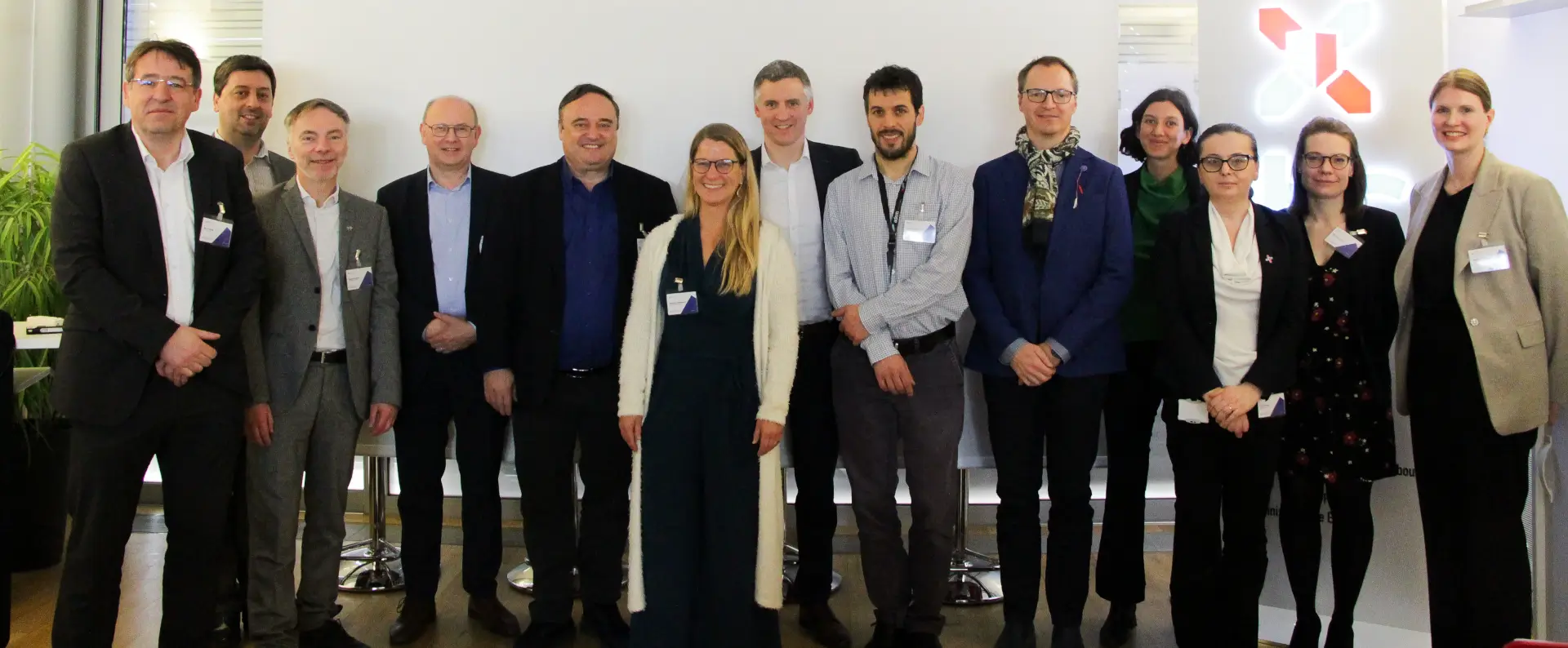
Finding the right way of connecting skills, opportunities and collaboration in the field of artificial intelligence is crucial in a context accelerating AI adoption. The first event in Luxembourg’s AI Sphere series brought together stakeholders from industry, academia and the public sector on 18 March 2026, at the Luxembourg House of Cybersecurity to address this shared challenge. More than a standalone event, it set the foundation for a coordinated effort to activate talent through upskilling, partnerships, and cross-sector engagement.
At the centre of this effort is the Luxembourg AI Factory, Luxembourg’s one-stop shop for AI implementation. The AI Factory plays a key role in connecting initiatives across education, industry, and policy, ensuring that talent development evolves in line with technological change rather than in isolation.
Growing need for AI skills
Opening the event, Pascal Bouvry, Dean of the Faculty of Science, Technology and Medicine at the University of Luxembourg, and Pascal Steichen, CEO of the Luxembourg House of Cybersecurity, set the scene by emphasising both the strategic importance of AI for Luxembourg and the need to approach it with a strong focus on trust, security and long-term talent development.
At the same time, the labour market is already reflecting the AI transformation. Insights from ADEM, the public employment service In Luxembourg, show a clear rise in demand for AI related skills, while also highlighting a broader shift: jobs are not simply disappearing but evolving. This was complemented by Julien Hugo, who leads the Experience Management initiative at KPMG and pointed out to the emergence of more autonomous and context-aware AI systems, pushing organisations to rethink how value is created and how humans interact with technology.
Ample training opportunities
Building on this, Serge Linckels, managing director of the Digital Learning Hub, provided a concrete view of how Luxembourg is addressing these challenges in practice, showcasing a wide range of training opportunities, from project-based learning models to dedicated AI academies, designed to support diverse profiles across the ecosystem.
From the academic perspective, education and ecosystem initiatives are increasingly working hand in hand. Philippe Hiligsmann, Vice‑Rector for Academic and Student Affairs at the University of Luxembourg, underlined the importance of preparing individuals to navigate uncertainty through critical thinking, adaptability and lifelong learning.
Alongside this, the development of the Luxembourg AI Factory and its activation through initiatives such as the AI Sphere is contributing to a growing ecosystem of programmes. Its services range from a consolidated AI training catalogue and mobility opportunities to events, matchmaking and knowledge-sharing formats, designed to better connect talent with opportunities, attract talent from abroad and foster collaboration across sectors.
Building an AI talent ecosystem
These considerations came together in the panel discussion, which highlighted the complexity of building an effective AI talent ecosystem. Discussions included speakers such as Marianne Hoffmann, representing the Work in Luxembourg initiative, Simone Niclou, for the research perspective from the University of Luxembourg, Julien Hugo for the industry and Mario Grotz, CEO of Luxinnovation, for the ecosystem view. Under the agile moderation from Inès Baer, Head of Assessments and roadmaps at Luxinnovation, they touched on the need to move beyond purely technical profiles, the importance of combining research excellence with applied impact, and the challenge of attracting, integrating and retaining talent in a highly competitive global landscape. The conversation also underscored the need for clearer organisational strategies, stronger governance and continuous learning to keep pace with rapid technological change.
Closing the event, Mario Grotz emphasised that Luxembourg’s strength lies in its ability to connect actors across sectors, and that continued coordination will be essential. Initiatives such as Luxembourg AI Factory, AI Sphere and Work in Luxembourg are already acting as bridges between talent and opportunity, helping to anchor skills within the changing ecosystem.
The question now is not whether AI will transform work, but how can Luxembourg mobilise its collective strengths fast enough to shape that transformation on its own terms.
Stay tuned for upcoming AI Sphere events as the journey continues across Luxembourg’s innovation ecosystem: from the Cybersecurity Breakfast at the Luxembourg House of Cybersecurity on 19 May 2026, to the Quantum AI Breakfast in partnership with the University of Luxembourg on 17 June (logistics), followed by sessions on sustainability (8 July) and space (26 November). See you soon as we continue exploring how AI is transforming key sectors together.