Quantum technology in Luxembourg: how businesses can prepare now
Experts at Luxembourg Venture Days explain how businesses can capture value in the quantum economy. Key takeaways inside.
 Emilio Naud
20/11/2026
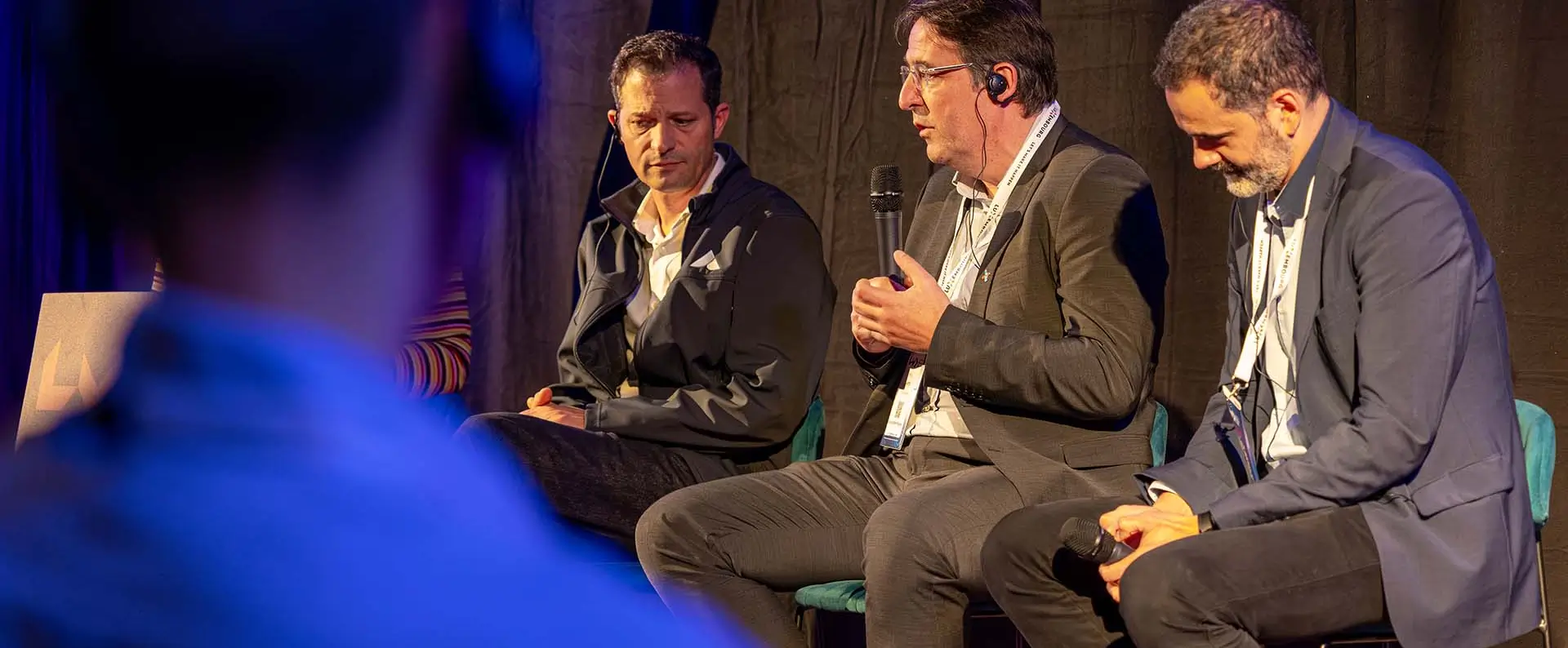
Quantum technology in Luxembourg is moving from laboratory research to revenue-generating business models. At a panel discussion during Luxembourg Venture Days on 14 October 2026, an investor, a European Commission official and the CEO of Luxinnovation outlined three priorities for businesses: directing capital beyond quantum hardware, preparing infrastructure and skills now, and adopting quantum cryptography before these technologies are fully deployed.
Why investors are betting on quantum technology now
Mathieu Costes, General Partner at AE, noted that the investment landscape has changed dramatically since their first quantum software investment in 2017. "From an investor standpoint, it moved from a scientific niche to generating revenues and returns." Mr Costes highlighted that while hardware is becoming a growth-stage bet, significant value lies in other layers such as software, quantum networking and quantum sensing. In defence, quantum sensors could turn the ocean into a transparent space, opening new investment fields.
Oscar Diez, Deputy Head of Unit of Quantum Technologies at the European Commission, agreed that technical progress is exceeding expectations, particularly in error correction, logical qubits and supply chain enabling technologies like cryogenics and control electronics. "We know that quantum computers will not replace classical computing. They will work together as accelerators, much like GPUs do today."
Mr Diez underlined that while Europe holds one-third of quantum companies globally and has excellent research, commercialisation remains shy and private investment lags behind the US. To address this, the European Commission is working on a Quantum Act, scheduled for launch on November 2026, to improve capital access and stimulate public procurement.
How Luxembourg is building its quantum ecosystem
Mario Grotz, CEO of Luxinnovation, emphasised the need for early preparation. "The role of Luxinnovation in that respect is to build the ecosystem, starting right now to create the right competences so that we are ready for quantum computing". He explained that Luxembourg is investing in infrastructure linked to its high-performance computer to allow companies to test modular approaches. Key short-term use cases include healthtech for molecular simulation and finance for fraud detection. Mr Grotz also urged businesses to adopt quantum cryptography immediately, to guard against scenarios in which encrypted data intercepted today could be decrypted by future quantum computers. "We must think about this right now, ensuring we apply quantum encryption as soon as possible to secure our systems when these technologies are fully deployed".
What Luxembourg AI Factory offers quantum-ready businesses
To help local companies act on these priorities, Luxembourg AI Factory provides targeted support across the quantum readiness journey. Through its Matchmaking – Enterprise & Research Centre service, startups and SMEs can connect with national research centres to co-develop solutions in areas highlighted by the panel, such as molecular simulation for healthtech or fraud detection models for the financial sector. Companies looking to test hybrid classical-quantum approaches can access the computational power of the MeluXina supercomputer through the Access to Compute and Storage service, mirroring the modular infrastructure strategy outlined by Mr Grotz. For organisations seeking European co-funding, the Digital Europe Programme and Horizon Europe open pathways to competitive calls in advanced digital skills and high-performance computing. Forward-looking enterprises are encouraged to contact Luxembourg AI Factory to explore collaborative opportunities and build their quantum readiness.