
Quantum technologies: From research to real-world impact
Quantum computing is moving from lab to boardroom. Dr Raoul Heese from NTT DATA explains where businesses can find practical value in quantum technologies today and how to prepare for what comes next.
 Emilio Naud
22/09/2026
Quantum mechanics has moved beyond academic physics into the commercial sphere. Across computation, secure communication and high-precision measurement, quantum technologies are on their way to redefine industrial competitiveness. For business leaders weighing investment decisions today, the critical question is no longer if quantum will matter, but where it delivers practical value now.
What is quantum utility and why does it matter now?
For many, quantum computing still evokes images of futuristic laboratories and abstract mathematics. Dr Raoul Heese, Lead Technical Consultant Quantum Computing at NTT DATA Germany, offers a clear-eyed perspective on what makes quantum so different: “Information is in fact physical. It really matters what kind of substrate and physical foundation you use to store it. This really depends on what you can do with it. Quantum computing is just quite a different medium for information. This means you have a distinct set of tools and computational abilities at your disposal. The physicality of information is one thing that really makes quantum computing different.”
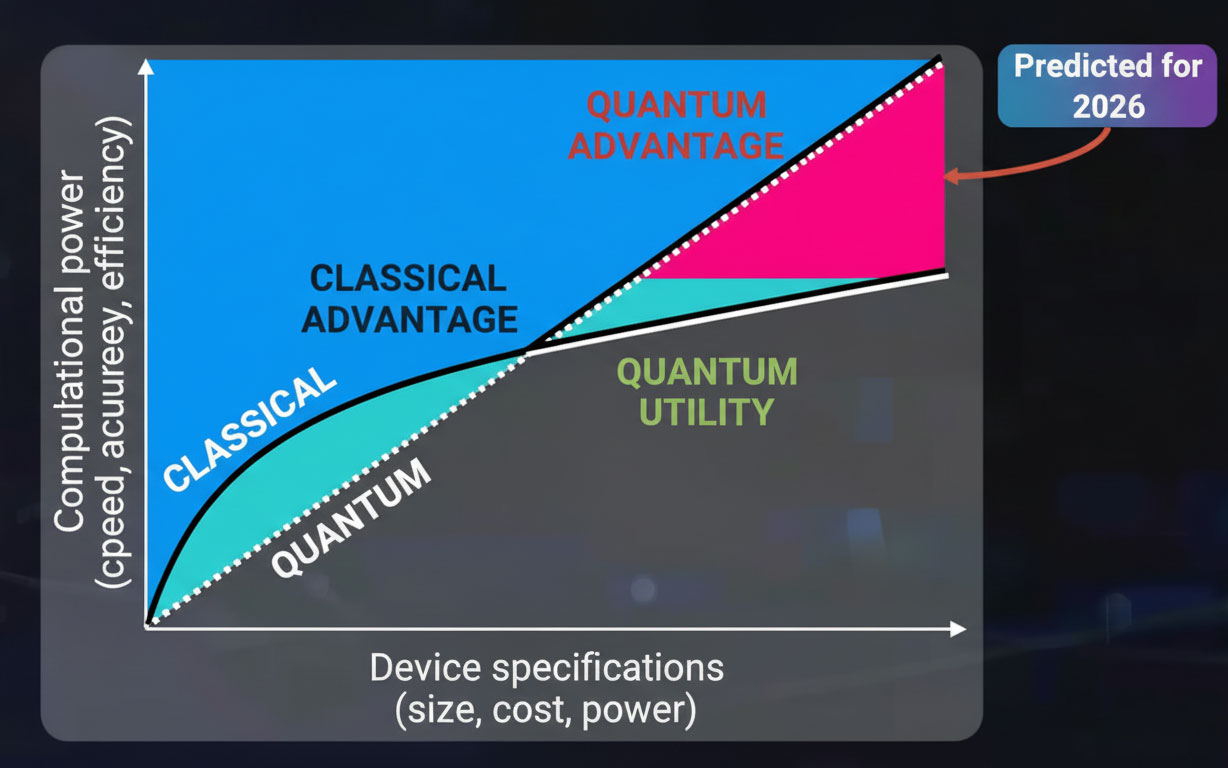
Rather than waiting for the elusive “quantum advantage”—where quantum computers decisively outperform classical machines—industry is now focused on “quantum utility”, the practical business value quantum can deliver in specific domains. Dr Heese notes, “In most cases quantum solutions are not better, at times they bring some utility, but we have never achieved a true quantum advantage yet.”
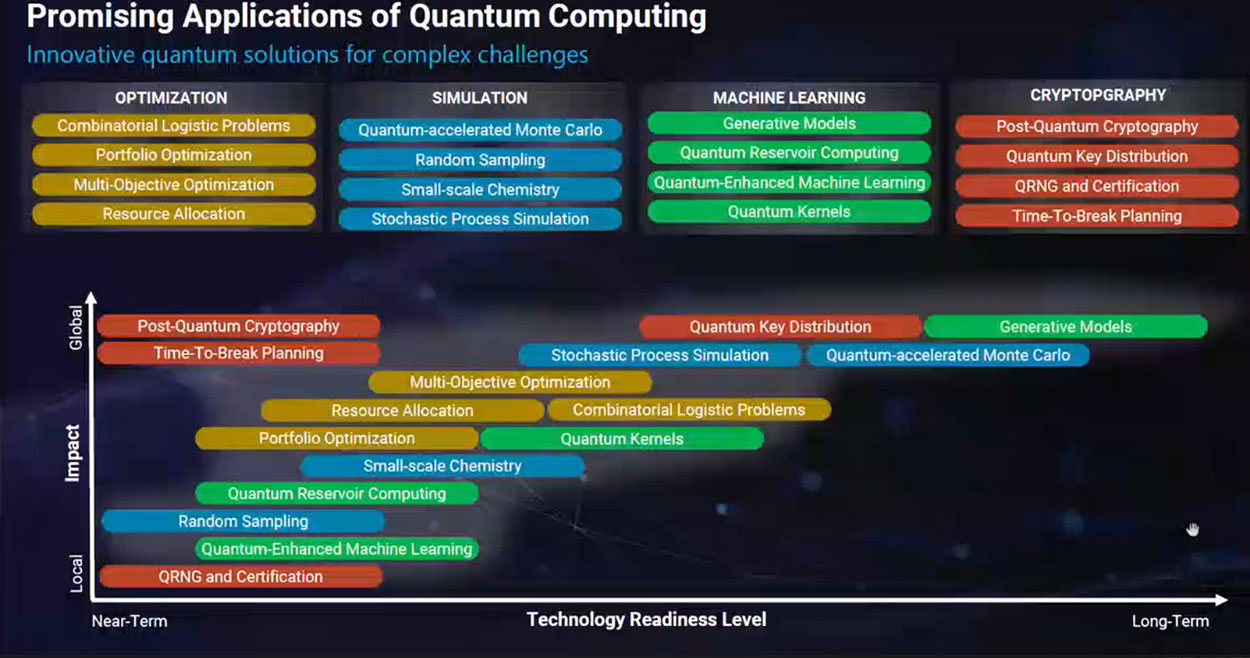
He points to combinatorial optimisation and simulation as the most promising near-term applications. “I have high hopes about optimisation because it can be natively discrete, that is called combinatorial optimisation, which would be exactly what is represented on a quantum computer. Quantum computers have the right structure to represent this data. It is particularly challenging to compute these kinds of problems classically, just because of the structure. Basically, a classical computer will never be able to solve such kind of problems efficiently. Therefore, this is a very logical direction to approach with quantum computing. And the results we have achieved so far are also promising.”
This pragmatic approach is already bearing fruit. As detailed in our report on quantum computing, these hybrid classical-quantum approaches are setting the pace for industrial pilots. Dr Heese references NTT DATA’s collaboration with Airbus on multi-objective supply chain logistics optimisation (balancing emissions, costs and resilience) and job shop scheduling for chemical production using the Coherent Ising Machine (CIM)—an optical quantum device—as prime examples of these hybrid systems in action.
In contrast, Dr Heese views quantum machine learning as a long-term academic research topic, citing the immense strength, decade-long refinement and low cost of classical artificial intelligence (AI) hardware as a formidable barrier to near-term quantum competitiveness.
Integrating quantum hardware into European data centres
To capture the full value of these technologies, European nations must focus on integrating quantum hardware into existing digital ecosystems. Luxembourg is well-positioned in this regard, boasting world-class infrastructure such as the MeluXina supercomputer and the upcoming MeluXina-Q quantum accelerator, which is scheduled to start operations in 2027.
Dr Heese identifies this integration as a critical, yet often overlooked, bottleneck in the global quantum landscape. “One of the main aspects that has not been exploited fully is the integration of quantum computers into existing ecosystems,” he notes. “There will be a time when companies will sell or rent their quantum computers to data centres. But what then? You need to integrate these devices into the existing ecosystem and need a corresponding scheduling of jobs, a corresponding efficient pre-processing of data, etc.”
He suggests that the development of a robust "quantum data centre software stack" and intelligent workload schedulers could become a unique strength for European data centres. “A scheduler that decides, if you put your workload into that, what is calculated on the quantum computer, what is calculated on the classical computer, and how this interacts and is scheduled. This type of ecosystem is missing and this could be a strength of European data centres, to have this.”
How businesses can prepare for quantum computing today
While the timeline for a broad-scale, generic quantum advantage remains uncertain, the strategic necessity of preparing for a quantum-enabled future is immediate. Organisations that delay their assessment risk falling behind in security, operational efficiency and technological sovereignty.
Dr Heese offers a clear message for policy makers, investors and business leaders: “It’s important, while quantum computing has no advantage today, to still make the assessment. What can it bring in two, five, ten years? Even if might be ten years away, it’s still important to prepare today to have a ready pathway roadmap towards what needs to be integrated. Quantum is already relevant.”
To help organisations navigate this transition, our latest series of Market Intelligence reports maps the complete value chain, providing a clear roadmap for decision makers looking to build early capabilities.
To gain a competitive advantage and take the quantum curve early, explore how Luxembourg AI Factory support can help your business prepare, and download our complete trilogy of reports from our Knowledge Hub.
Quantum glossary:
Quantum utility: The point at which a quantum computer performs calculations that are useful and cost-effective for business operations, even if classical supercomputers can technically still solve them.
Combinatorial optimisation: A branch of mathematics focused on finding the single best solution out of a massive, finite set of possibilities (e.g., finding the most efficient global supply chain route or factory schedule).
Hybrid classical-quantum computing: An operational model where a classical computer handles the bulk of a program's logic but offloads specific, complex mathematical calculations to a quantum accelerator.